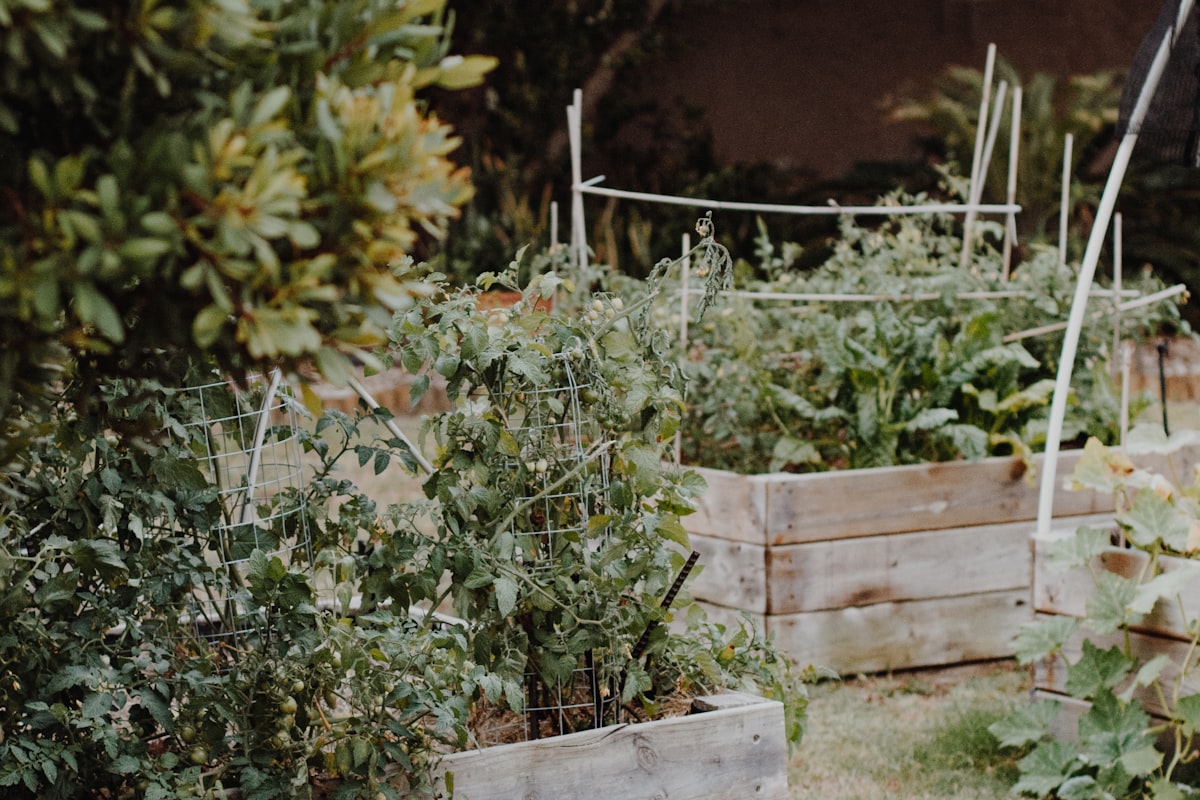
A 4x8-foot raised garden bed kit from a garden centre costs $150-$400. The same bed built from lumber at Home Depot or Lowe’s costs $50-$120 depending on the wood you choose. The build requires six cuts with a saw, about 20 screws, and approximately one hour of your time. If you’ve never built anything before, this is one of the best first projects you can take on — it’s forgiving, useful, and visible from your back porch as a daily reminder that you built something with your hands.
Raised beds solve real gardening problems. They give you control over soil quality (critical if your native soil is clay, sand, or contaminated). They drain better than in-ground gardens. They warm up earlier in spring. They’re easier on your back. And they keep a clean boundary between garden and lawn, which means less weeding at the edges. If you’ve been thinking about starting a vegetable garden, a raised bed is the easiest way to guarantee good growing conditions from day one.
Key Takeaways
- The ideal beginner bed is 4 feet wide, 8 feet long, and 10-12 inches tall. Four feet lets you reach the centre from either side without stepping in the bed. Eight feet is a standard lumber length, which means no waste.
- Cedar is the best wood for garden beds. It’s naturally rot-resistant and lasts 10-15 years without treatment. Untreated pine costs half as much but lasts only 3-5 years.
- Modern pressure-treated lumber is safe for vegetable gardens. The arsenic-based treatment (CCA) was phased out in 2003. Current ACQ and CA-B treatments use copper, which doesn’t leach in meaningful amounts.
- Soil is more expensive than the bed itself. A 4x8x10-inch bed needs about 27 cubic feet of soil mix. Budget $80-$150 for quality garden soil.
- Level the ground first. A bed that’s not level pools water on one side and dries out on the other. Five minutes with a rake saves a season of uneven growth.
Choosing Your Lumber
The wood you pick determines how long your bed lasts, how much it costs, and whether you need to worry about chemicals leaching into your food.
Cedar
Western red cedar is the gold standard for raised beds. It contains natural oils (thujaplicins) that resist rot, insects, and fungal decay without any chemical treatment. A cedar bed lasts 10-15 years in ground contact, often longer in drier climates.
The catch is cost. Cedar lumber runs $3-$6 per linear foot for 2x10 or 2x12 boards, depending on your region and grade. A 4x8 bed using 2x10 cedar boards costs approximately $80-$120 in lumber alone. Cedar is also increasingly scarce, and prices have risen 30-40% over the past few years.
If you’re building one or two beds that you want to last a decade-plus, cedar is worth the investment. If you’re building five beds for a large garden, the cost adds up fast.
Untreated Pine or Fir
Standard construction lumber (Douglas fir, SPF — spruce-pine-fir) costs roughly half what cedar does: $1.50-$3.00 per linear foot for 2x10 or 2x12 boards. A 4x8 bed in pine costs $40-$70 in lumber.
The tradeoff is durability. Untreated softwood in ground contact rots in 3-5 years. In wet climates, it can show significant decay after just two seasons. You can extend the life with a coat of raw linseed oil on the exterior faces, which buys you an extra year or two, but pine beds are fundamentally temporary. Many gardeners accept this — $50 for a bed that lasts four years is still cheap.
Pressure-Treated Lumber
Pressure-treated (PT) lumber costs slightly more than untreated pine ($2.00-$4.00 per linear foot) and lasts 15-20+ years in ground contact. It’s the cheapest way to get long-term durability.
The question everyone asks: is it safe for growing food? The answer, backed by current research, is yes — with caveats. The old CCA (chromated copper arsenate) treatment, which was standard until 2003, contained arsenic. Lumber treated with CCA should not be used for food gardens. But CCA hasn’t been sold for residential use in over 20 years.
Modern pressure-treated lumber uses ACQ (alkaline copper quaternary) or CA-B (copper azole). These treatments use copper as the primary preservative. Studies by university extension programs (including Oregon State and the University of Missouri) have found that copper leaching from ACQ-treated lumber into adjacent soil is minimal and doesn’t accumulate in edible plant tissues at levels that pose health concerns. If this still makes you uneasy, line the interior of the bed with 6-mil polyethylene plastic sheeting — this creates a barrier between the wood and soil while still allowing drainage at the bottom.
Other Materials
Composite lumber (Trex, TimberTech): Won’t rot, doesn’t leach chemicals, looks clean. Expensive — $5-$10 per linear foot. Also bows under soil pressure unless heavily braced, because it’s more flexible than real wood.
Concrete blocks: Cheap and nearly permanent. A 4x8 bed built with 8-inch concrete blocks costs $30-$50 in blocks alone. They absorb heat, which can be a benefit (warming soil in spring) or a problem (cooking roots in summer in hot climates). Not the prettiest option, but incredibly functional.
Galvanized steel/corrugated metal: Increasingly popular. Corrugated metal panels with a wood cap rail look sharp and last indefinitely. Material costs are $60-$150 per bed depending on gauge. Metal also heats up in direct sun, which can stress roots along the edges in hot climates. A layer of soil or mulch against the interior metal wall mitigates this.
Dimensions: Getting Them Right
Width: 4 Feet Maximum
The single most important dimension. A raised bed should be narrow enough that you can reach the centre from either side without stepping into the bed. For most adults, that’s 3-4 feet. If the bed is against a fence or wall where you can only access one side, make it 2 feet wide maximum.
Stepping into the bed compacts the soil, which defeats one of the main advantages of raised bed gardening. Compacted soil restricts root growth and drainage. Build narrow and reach in.
Length: 8 Feet Is the Sweet Spot
Eight feet is a standard lumber length, which means you can use full boards with no cutting for the long sides. You can build any length you want — 4 feet, 6 feet, 12 feet — but non-standard lengths create lumber waste or require splicing.
For beds longer than 8 feet, add a cross-brace or middle support every 4-6 feet. Soil pressure will bow long boards outward over time without internal bracing.
Height: 10-12 Inches for Most Situations
A single 2x10 or 2x12 board gives you 9.25 or 11.25 inches of actual height (lumber dimensions are nominal, not actual). This is enough depth for most vegetables, herbs, and annual flowers. Root crops like carrots and parsnips prefer 12+ inches. Tomatoes, peppers, lettuce, and most herbs thrive in 10 inches.
If you’re building on a hard surface (concrete, compacted gravel) where roots can’t extend below the bed, go taller — 18-24 inches minimum, using two stacked courses of lumber.
For gardeners with mobility issues who need to reduce bending, a 24-36 inch bed with legs or a solid base puts the soil at a comfortable working height. These are more complex builds and require additional framing to support the weight of wet soil, which is considerable — a 4x8x24-inch bed full of wet soil weighs approximately 2,000-3,000 pounds.
Tools and Materials List
For one 4x8-foot bed, 10 inches tall:
Lumber:
- 3 boards of 2x10, 8 feet long (two for the long sides, one cut in half for the two short sides)
- 1 board of 4x4, 8 feet long (cut into four 10-inch corner posts)
Hardware:
- 16 exterior-grade screws, 3 inches long (#10 or equivalent — GRK R4, SPAX, or similar structural screws)
- Box of 2.5-inch exterior screws (for securing boards to corner posts)
Optional:
- Landscape fabric or hardware cloth (1/2-inch) for the bottom to deter gophers and moles
- 6-mil poly sheeting if lining the interior against treated wood
Tools:
- Circular saw or hand saw (if you don’t own one, most lumber yards make cuts for $0.50-$1.00 each)
- Drill/driver with a #2 Phillips or square-drive bit — if you don’t have one yet, our drill and driver guide covers what to buy
- Tape measure
- Speed square or carpenter’s square
- Level (a 4-foot level is ideal, but a 2-foot or a phone-based level app works)
- Rake for site preparation
Step-by-Step Build
Step 1: Prepare the Site
Choose a spot that gets at least 6-8 hours of direct sunlight daily. Most vegetables need full sun. Avoid placing the bed directly against a building foundation (drainage issues) or under large trees (shade and root competition).
Remove any grass or weeds from the footprint. You can strip the sod with a flat shovel, or lay cardboard over the grass and let it smother. If you’re in a hurry, just mow the area as short as possible — grass under a foot of soil dies within a few weeks.
Level the ground. Use a rake to flatten the area, then set a level across the space in both directions. You don’t need surveyor precision, but a significant slope (more than an inch across 8 feet) causes water to pool at the low end. If your site slopes, dig down the high side rather than building up the low side — building up creates a gap between the bed frame and the ground where soil washes out.
Step 2: Cut Your Lumber
You need the following pieces:
- 2 pieces of 2x10 at 8 feet (long sides — no cutting needed)
- 2 pieces of 2x10 at 4 feet (short sides — cut from the third 8-foot board)
- 4 pieces of 4x4 at 10 inches (corner posts — cut from the 4x4)
If you’re cutting with a circular saw, use a speed square as a guide for straight crosscuts. Clamp the board to a stable surface. Wear safety glasses — sawdust and splinters are guaranteed.
Safety note: If you’re using a circular saw for the first time, read the manual, keep the blade guard functional, and never reach under or behind the spinning blade. Use clamps, not your free hand, to hold the workpiece.
Step 3: Assemble the Short Sides
Take one 4-foot board. Stand a 4x4 corner post at each end, flush with the top and outside edges. The post should extend below the bottom edge of the board to act as a stake that anchors the bed into the ground.
Wait — at 10 inches for both the board width and the post length, the post will be flush top and bottom. That’s correct for a bed on level ground. If you want to stake the bed into soft soil for extra stability, cut the 4x4 posts at 16-18 inches instead of 10, so they extend 6-8 inches below the board as ground stakes.
Pre-drill pilot holes to prevent the wood from splitting, then drive two 3-inch screws through the 2x10 into each 4x4 post. The screws should be about 2 inches from the top and bottom of the board.
Repeat for the second short side.
Step 4: Attach the Long Sides
Stand the two short-side assemblies upright, 8 feet apart. Position an 8-foot board against the outside of the corner posts, flush with the top. Pre-drill and drive two screws through the long board into each corner post — that’s four screws per long side.
Repeat for the second long side. You now have a rectangle.
Step 5: Square the Bed
Measure the diagonals — corner to corner, both ways. If both diagonal measurements are equal, the bed is square. If they’re not, push the long diagonal corner inward until the measurements match. This takes 30 seconds and matters for both appearance and uniform soil distribution.
Step 6: Place and Level
Move the assembled bed to its final position. Set your level on the top edge of each side. Shim the low corners with flat stones or dig down the high corners until the bed sits level in both directions.
If you cut extended corner posts (Step 3), tap them into the ground with a rubber mallet. This anchors the bed against shifting.
Step 7: Line the Bottom (Optional)
If gophers, moles, or voles are a problem in your area, lay 1/2-inch galvanized hardware cloth across the bottom of the bed. Staple it to the inside of the boards with a staple gun. This prevents burrowing critters from entering the bed from below while still allowing drainage and earthworm movement.
If you used pressure-treated lumber and want a barrier, staple 6-mil polyethylene sheeting to the interior walls only. Do not line the bottom — water needs to drain.
Filling the Bed: The Soil That Makes It Work
The soil is where most of your budget goes, and it’s where most beginners cut corners. Don’t. The whole point of a raised bed is controlling your growing medium. Fill it with garbage soil and you’ve built an expensive frame around the same problems you were trying to avoid.
The Standard Mix
The classic raised bed soil recipe is roughly:
- 50-60% topsoil — bulk garden topsoil or screened loam. Not the bagged stuff from Home Depot, which is mostly composted wood and costs $5-$8 per cubic foot. Buy bulk topsoil from a landscape supply yard for $25-$40 per cubic yard.
- 30-40% compost — well-aged compost adds organic matter, nutrients, and beneficial microbes. Bulk compost from a landscape supplier runs $30-$50 per cubic yard. Municipal composting facilities often sell or give away compost for less.
- 10% perlite or coarse vermiculite — improves drainage and prevents compaction. Optional if your topsoil is already loamy, essential if it’s heavy clay.
A 4x8-foot bed that’s 10 inches deep holds about 27 cubic feet (1 cubic yard) of material. At bulk prices, filling it costs $50-$100. Filling it with bagged garden soil from a hardware store costs $150-$250+ for the same volume — bags are convenient for small beds but prohibitively expensive for anything 4x8 or larger.
The “Lasagna” Method for Deeper Beds
If your bed is 18-24 inches tall, you don’t need to fill the entire depth with premium soil mix. Use the “Hugelkultur lite” or lasagna layering approach:
- Bottom 6-8 inches: Logs, branches, leaves, straw, cardboard — bulky organic material that breaks down slowly. This saves money and creates a long-term nutrient reserve.
- Middle 4-6 inches: Semi-composted material, grass clippings, old garden soil, or aged manure.
- Top 8-10 inches: Your premium soil mix (the recipe above).
The bottom layers decompose over 2-3 years, settling the bed height. Top off with fresh compost annually.
Maintenance Over the Years
Year 1: The soil will settle 1-2 inches after the first few waterings. Top off with compost.
Annually: Add 1-2 inches of compost on top of the bed each spring. This replaces nutrients consumed by plants and maintains organic matter content. This single habit — annual compost top-dressing — is the most important thing you can do for long-term bed productivity.
Every 3-5 years (for untreated pine beds): Inspect the wood for rot. Softwood boards eventually soften and bow. You can replace individual boards without disturbing the soil by unscrewing the rotted board, slipping a new one in, and re-screwing.
Watering: Raised beds drain faster and dry out quicker than in-ground gardens. In hot weather, daily watering may be necessary. A soaker hose or drip irrigation system ($20-$40 for a basic kit) laid on the soil surface under mulch is the most efficient approach.
Design Variations
The L-Shape or U-Shape
For corner spaces, build two beds at right angles and join them at the corner with a shared 4x4 post. This creates a visually cohesive L-shaped garden. A U-shape wraps three sides, creating an enclosed garden workspace.
Tiered Beds
On a slope, build multiple beds at different heights, stepping down the grade like a terrace. Each bed is level; the overall installation follows the slope. This is both practical (level soil retains water evenly) and visually striking.
Attached Benches
A wide cap rail — a 2x6 laid flat on top of the bed frame — creates a comfortable ledge for sitting while you weed or harvest. This adds $15-$20 in lumber and is especially appreciated by anyone with back or knee issues.
Cold Frame Integration
Build a 4x4-foot bed with grooves or mounting points for a removable cold frame lid (a simple wooden frame with a clear polycarbonate panel). This extends your growing season by 4-6 weeks in spring and fall.
Frequently Asked Questions
How deep does a raised bed need to be for tomatoes?
Tomato roots typically extend 12-24 inches deep. A 10-12-inch bed on top of native soil works fine because the roots grow through the bottom into the ground below. If the bed sits on concrete, pavement, or severely compacted soil where roots can’t penetrate, you need at least 18 inches of bed height for tomatoes.
Can I put a raised bed on concrete or a patio?
Yes, with two considerations. First, you need sufficient depth — 18 inches minimum for most vegetables, 24 inches for root crops and tomatoes. Second, you need drainage. Drill or leave gaps in the bottom of the bed so water flows out, and expect water runoff on the concrete surface. Placing the bed on a few inches of gravel helps with drainage.
Do I need to line the bottom of the bed with landscape fabric?
Not for weed prevention — the weight and depth of the soil suppresses weeds from below. Landscape fabric on the bottom actually restricts drainage and root penetration into native soil, which are both desirable. The only reason to line the bottom is hardware cloth for burrowing pest protection. For the walls, lining is only necessary if you want a barrier against pressure-treated lumber.
How much does it cost total, including soil?
A 4x8x10-inch cedar bed: $80-$120 for lumber, $10-$15 for hardware, $50-$100 for bulk soil. Total: $140-$235. An untreated pine bed: $40-$70 for lumber, $10-$15 for hardware, $50-$100 for soil. Total: $100-$185. The soil is the big variable — bagged soil from a hardware store can double these numbers.
My existing raised bed has tired, depleted soil. Can I rejuvenate it without replacing all the soil?
Absolutely. The fix is simpler than you think: add 3-4 inches of quality compost on top each spring and let earthworms and soil microbes incorporate it over the season. For severely compacted or hydrophobic (water-repelling) soil, fork the top 6-8 inches to break up the crust and mix in the compost by hand. Adding a balanced organic granular fertilizer (like Espoma Garden-tone, $15 per 8-pound bag) at the same time provides immediate nutrients while the compost contributes long-term fertility.