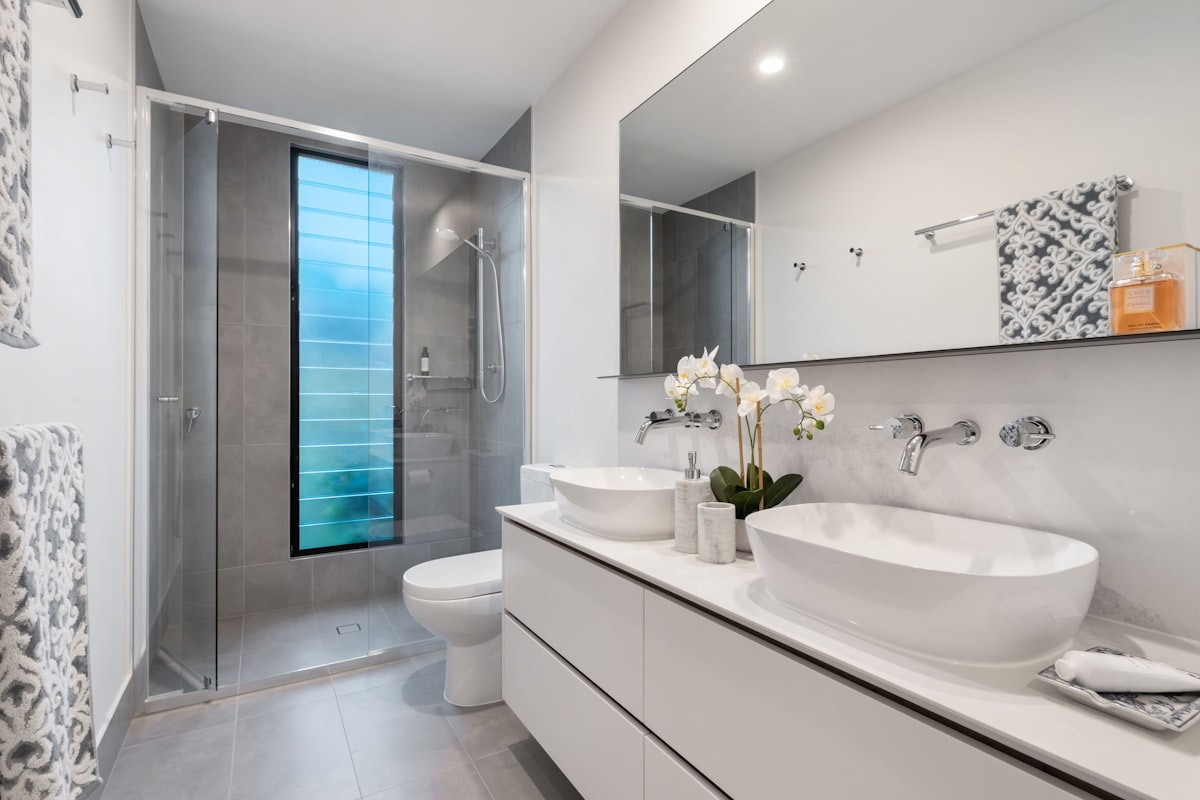
The national average for a full bathroom renovation sits around $11,000 to $15,000. If that number just made your stomach drop, take a breath. A smart homeowner who knows where to swing a hammer — and more importantly, where not to — can pull off a genuine transformation for $3,000 to $6,000. The trick is knowing which jobs are safe to tackle yourself and which ones will cost you far more if you botch them than if you’d just hired a pro from the start.
I’ve watched friends rip out perfectly functional tile on a Saturday morning with no plan for waterproofing. Two months later, they’re calling a contractor to fix water damage behind the walls. Don’t be that person.
Key Takeaways
- A budget bathroom renovation ($3,000-$6,000) focuses on cosmetic updates — paint, vanity, fixtures, hardware, and flooring — while leaving plumbing and electrical layout untouched.
- Waterproofing is the single most important thing in a bathroom. If you’re not confident doing it right, hire it out. Period.
- Paint and hardware swaps are the highest-impact, lowest-cost changes you can make — a $40 gallon of paint and $60 in new hardware can make a dated bathroom feel modern.
- Permits are not optional. Any work involving plumbing rough-in changes, electrical circuit additions, or structural modifications requires a permit in virtually every municipality.
Where Your Money Actually Goes
Before you start pricing out subway tile, understand where bathroom renovation budgets typically break down. On a mid-range remodel, expect roughly:
- Labour: 40-50% of total cost (this is why DIY saves so much)
- Vanity and countertop: 15-20%
- Tile and flooring: 10-15%
- Fixtures (faucet, showerhead, toilet): 10-15%
- Everything else (paint, hardware, lighting, mirror, accessories): 10-15%
Labour is the elephant in the room. A plumber charges $80-$150/hour. A tile installer gets $10-$25 per square foot for labour alone. An electrician runs $75-$130/hour. When you DIY the tasks you’re capable of, you’re essentially paying yourself those rates.
But here’s the flip side: a bad tile job costs you the tile, the labour to rip it out, and the labour to redo it. A bad plumbing connection can leak inside a wall for months before you notice the mould. Know your limits.
What You Can Safely DIY
These are the tasks where a motivated beginner with YouTube access and basic tools can produce professional-looking results.
Painting
Bathroom paint is the highest-ROI project in any renovation. A gallon of Benjamin Moore Aura Bath & Spa (around $55) or Sherwin-Williams Emerald ($60) covers roughly 350-400 square feet. For a standard bathroom, you’ll need one gallon, maybe two if you’re going from dark to light.
Use a satin or semi-gloss finish — anything flatter will absorb moisture and eventually peel. Remove everything from the walls, patch nail holes with lightweight spackle (DAP DryDex turns from pink to white when it’s dry, which is genuinely helpful), sand smooth with 220-grit, and prime bare spots with Zinsser Bulls Eye 1-2-3.
Tape where the ceiling meets the wall if you’re not confident cutting in freehand. If you want to learn that technique, check out our guide to painting a room — it covers cutting in detail.
Vanity Replacement
Swapping a vanity is more accessible than most people think. A pre-assembled vanity with countertop and sink from Home Depot or Lowe’s runs $250-$800 depending on size and material. The Glacier Bay 36-inch vanity at Home Depot ($349) is solid for the price. If you want something nicer, the Allen + Roth Moravia line ($450-$600) looks substantially more expensive than it is.
The process: turn off the water supply valves under the sink, disconnect the supply lines and P-trap (have a bucket ready), remove the old vanity, set the new one, and reconnect the plumbing. If the supply lines and drain align — and with a like-for-like size swap, they usually do — this is a half-day job. You’ll need an adjustable wrench, plumber’s tape, a level, and silicone caulk.
When this becomes a “hire a pro” job: If you’re changing the vanity size and the drain or supply lines need to move, that’s plumbing rough-in work. Call a plumber.
Fixtures and Hardware
Replacing a faucet, showerhead, towel bars, toilet paper holder, and cabinet pulls is the easiest work in a bathroom renovation and makes a surprising difference. Moen and Delta both make solid faucets in the $120-$200 range. The Moen Align series in matte black or brushed gold has become the go-to for that modern-but-not-trendy look.
A new showerhead takes five minutes. Unscrew the old one, wrap the threads with plumber’s tape, screw on the new one. The Speakman Anystream ($50) has been a contractor favourite for years because it actually produces pressure, unlike some of those rainfall heads that feel like standing in a light mist.
Toilet Replacement
This intimidates people, but swapping a toilet is straightforward. A good toilet — the Toto Drake II ($350) is the gold standard for residential use — bolts to the floor with two bolts, connects to the water supply with one line, and seals to the drain with a wax ring. Total install time: about an hour. The hardest part is carrying the old one out because porcelain is heavy and awkward.
Turn off the water, flush to empty the tank, sponge out remaining water, disconnect the supply line, remove the floor bolts, and lift straight up. Scrape the old wax ring, set a new one, lower the new toilet onto the bolts, tighten evenly, reconnect the supply, and done.
Flooring (With Caveats)
Luxury vinyl plank (LVP) or luxury vinyl tile (LVT) is the budget-friendly flooring king for bathrooms. It’s waterproof, looks decent, and most of it clicks together without adhesive. LifeProof (Home Depot’s house brand) runs $2.50-$4.00 per square foot and holds up well. A 50-square-foot bathroom floor costs $125-$200 in material.
You’ll need to remove the toilet first, lay the flooring, and reinstall the toilet on top. An oscillating multi-tool helps for undercutting door trim so the flooring slides underneath.
The caveat: If your subfloor is uneven, soft, or shows any signs of water damage, stop. That’s a structural issue. You need to address the subfloor before any new flooring goes on top, and depending on severity, that might mean a contractor.
What You Should Hire Out
This is where the “budget” part of a budget renovation gets tested, because these are the tasks where mistakes are expensive, dangerous, or both.
Plumbing Rough-In Work
If your renovation involves moving a drain, relocating supply lines, or tying into the main stack, hire a licensed plumber. This isn’t snobbery about DIY — it’s physics and building code. A drain that isn’t properly sloped (1/4 inch per foot is standard) will clog constantly. A vent that’s incorrectly connected can allow sewer gas into your home. Many jurisdictions require a permit and inspection for rough plumbing work.
Budget $500-$1,500 for plumbing rough-in depending on scope. Swapping out fixtures on existing connections? That’s fine to DIY. Moving pipes? Call a pro.
Electrical Work
Safety warning: Working with electrical wiring in a wet environment like a bathroom carries serious injury risk. Building codes require GFCI protection on all bathroom circuits, and many jurisdictions require a licensed electrician for any new circuit work.
If you’re adding a new light fixture in an existing electrical box, that’s a reasonable DIY task — turn off the breaker, confirm it’s dead with a non-contact voltage tester, swap the fixture. But adding new circuits, moving outlets, or installing a bathroom exhaust fan where none exists? Hire an electrician. Expect $200-$500 for adding a vent fan, $150-$300 per new outlet or fixture on a new circuit.
Waterproofing
This is the hill I’ll die on. Waterproofing a shower or tub surround is the single most critical part of a bathroom renovation. If water gets behind your tile and into the wall cavity, you’re looking at mould, rot, and a renovation that costs double what the original one did.
A system like Schluter KERDI or RedGard liquid waterproofing membrane applied to cement board isn’t complicated in theory. But the seams, corners, and transitions around the curb and fixtures need to be done right. If you’ve tiled before and understand waterproofing principles, go for it. If this is your first rodeo, pay a tile contractor to handle the shower — including waterproofing and tile. Budget $1,500-$3,000 for a professional shower retile depending on size and tile choice.
Tile Work (Shower Walls and Floor)
Tiling a flat backsplash? Manageable for a careful beginner. Tiling a shower with its slopes, drains, corners, and waterproofing? That’s a different category of difficulty. Shower floor tile needs to slope toward the drain. Niche shelves need to be waterproofed independently. Inside and outside corners need proper treatment.
If you’re set on doing it yourself, start with a small project — a bathroom floor or a backsplash — before attempting a full shower. The materials are too expensive and the consequences of failure too significant to learn on.
Material Choices That Save Money Without Looking Cheap
The difference between a bathroom that looks like a $15,000 reno and one that looks like a $4,000 reno is less about how much you spend and more about where you spend it.
Countertops: Skip granite and quartz for a small vanity. A cultured marble integrated sink/countertop ($150-$250) looks clean and eliminates the gap where the sink meets the counter. If you want stone, remnant pieces at local stone yards are dramatically cheaper than ordering a full slab.
Tile: Large-format tile (12x24 or larger) reads as more modern and upscale than small tile, and it’s faster to install because there’s less grout. The MSI Adella series at Home Depot ($2.50/sq ft) is a porcelain tile that looks remarkably like marble at a fraction of the cost.
Mirrors: Skip the framed mirror from the vanity section. A frameless beveled mirror from a glass shop costs $50-$100 and looks cleaner. Or frame your existing builder-grade plate mirror with a $30 MirrorMate kit.
Lighting: A single modern vanity light makes a bigger visual impact than you’d expect. The Globe Electric Harrow 3-light ($50) in matte black is an easy pick. If your budget allows, a backlit mirror ($100-$200) eliminates the need for a separate vanity light entirely.
Realistic Timeline
Here’s what a DIY-heavy budget renovation actually looks like, assuming you’re working weekends:
Weekend 1: Demo day. Remove old vanity, toilet, mirror, light fixtures, and hardware. Patch and prep walls. This is messier and more time-consuming than you expect — budget the full day.
Weekend 2: Paint walls and ceiling. Install new flooring (if applicable).
Weekend 3: Install new vanity, connect plumbing, install toilet.
Weekend 4: Install light fixture, mirror, hardware, accessories. Caulk everything — our caulking guide covers product selection and technique for clean, waterproof beads. Final touches.
If you’re having a pro handle the shower tile or plumbing, schedule them for the week between your demo and your install weekends. Coordinate this before you start — good contractors are booked 2-6 weeks out. Get the scope, price, and timeline in writing, too: if the work goes badly wrong and the contractor won’t make it right, our guide to suing a contractor in small claims court explains your options.
Total timeline: 4-6 weekends for DIY portions, potentially plus 1-2 weeks for professional work.
Permits: Don’t Skip This
I know, nobody wants to hear about permits. But here’s the reality: if you sell your house and the buyer’s inspector finds unpermitted plumbing or electrical work, you’ll either have to open walls for inspection, pay to have the work redone, or negotiate a price reduction. It’s cheaper to pull the permit.
Generally, you need a permit for:
- Any new plumbing lines or relocating existing ones
- Any new electrical circuits or moving existing outlets
- Structural changes (moving or removing walls)
You typically do not need a permit for:
- Cosmetic changes (paint, hardware, fixtures on existing connections)
- Like-for-like replacements (new toilet on existing flange, new faucet on existing supply lines)
- Flooring replacement
Check with your local building department. Many now have online portals where you can apply and pay in minutes.
Budget Breakdown: The $4,500 Bathroom
Here’s a realistic budget for a solid renovation that combines DIY labour with smart material choices:
- Pre-assembled vanity with countertop and sink: $450
- Faucet (Moen Align): $160
- Toilet (Toto Drake II): $350
- Luxury vinyl plank flooring (50 sq ft): $175
- Paint and supplies: $80
- Showerhead: $50
- Vanity light fixture: $60
- Mirror: $75
- Hardware (towel bar, TP holder, robe hooks, cabinet pulls): $80
- Caulk, spackle, tape, and misc supplies: $50
- Professional shower retile (if needed): $2,500
DIY total (no shower work): ~$1,530 With professional shower retile: ~$4,030
Add 15% for unexpected costs (there are always unexpected costs), and you land around $1,750 or $4,600 respectively.
Frequently Asked Questions
Can I renovate a bathroom for under $1,000?
Yes, but you’re limited to cosmetic updates only: paint, new hardware, a new mirror, a new light fixture, a new showerhead, and maybe new cabinet pulls. This is actually a perfectly valid approach if your bathroom is functional but ugly. A fresh coat of paint and modern hardware can make a 1990s bathroom feel current. Don’t underestimate the power of removing a dated oak-framed mirror and brass fixtures.
How long does a DIY bathroom renovation actually take?
For a cosmetic-only update (paint, fixtures, hardware), a long weekend. For a full renovation including new vanity, toilet, and flooring, 4-6 weekends working at a realistic pace. The most common mistake is underestimating demo and prep time. Removing an old vanity that’s been caulked and siliconed to the wall for 20 years takes longer than you think.
Should I replace the bathtub or refinish it?
Refinish it. Replacing a bathtub involves disconnecting the drain and overflow, potentially tearing out the surround, and dealing with a cast iron or steel tub that weighs 200-400 pounds. A professional refinish costs $300-$600 and gives you a like-new surface that lasts 10-15 years. Bathtub refinishing kits from the hardware store ($30-$50) exist but rarely produce professional-quality results — the prep and application technique matter enormously.
Do I really need a vent fan?
If your bathroom has a window, a vent fan isn’t always code-required, but it’s still a very good idea. Moisture is the enemy of everything in a bathroom — it causes mould, peeling paint, and warped wood. A vent fan rated for your bathroom’s square footage (1 CFM per square foot is the rule of thumb) removes moisture at the source. The Broan-NuTone 80 CFM fan ($50-$80) is quiet and effective. If you’re adding one where none existed, this is an electrician job because it involves cutting into the ceiling and running ductwork to the exterior.
What’s the best order of operations for a bathroom renovation?
Demo first, then rough plumbing and electrical (if applicable), then walls and ceiling (paint), then flooring, then vanity and toilet, then fixtures and accessories, then caulk and final touches. Working top-down and inside-out prevents you from damaging finished surfaces while working on adjacent areas. The biggest rookie mistake is installing the toilet before the flooring — always floor first, then set the toilet on top.