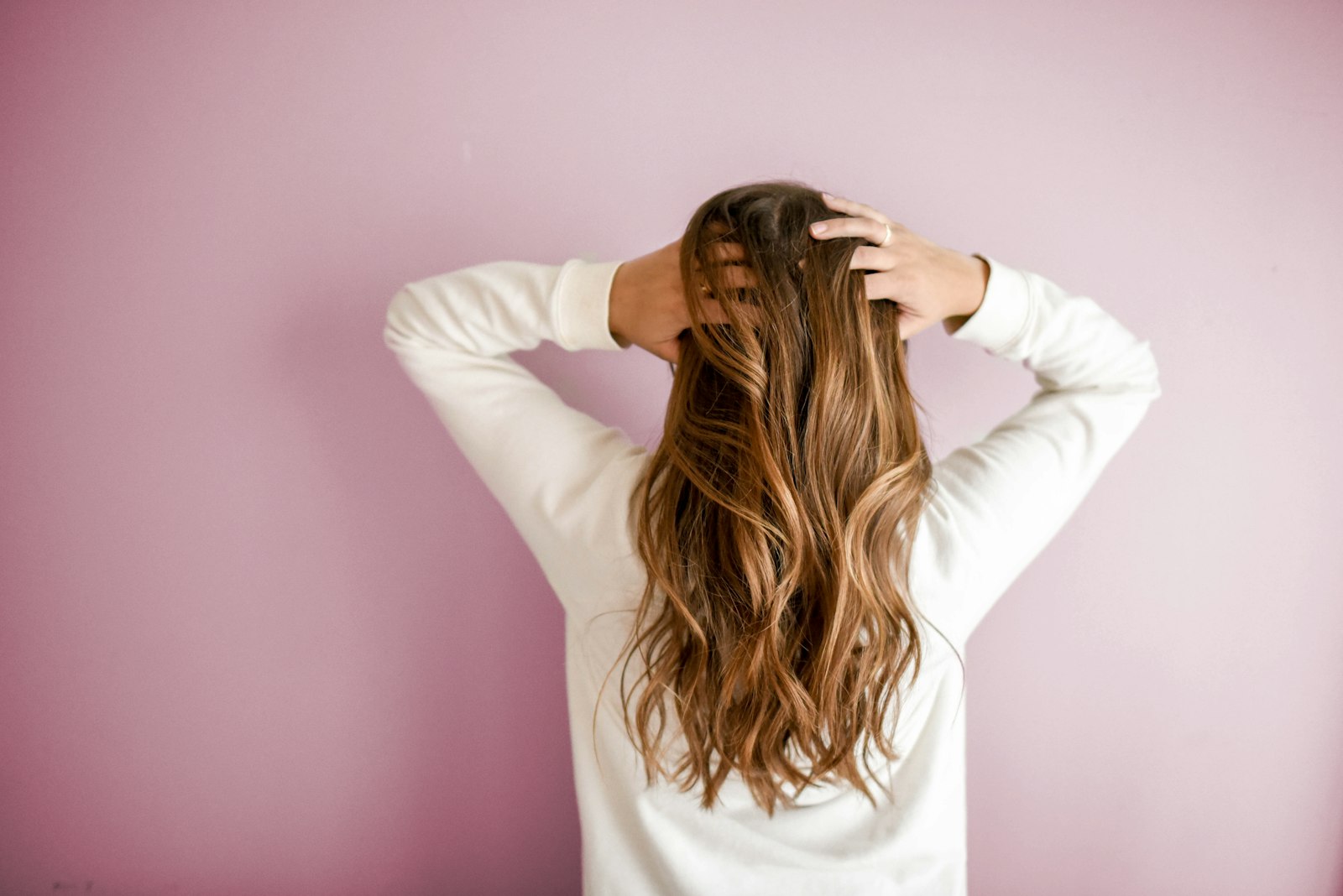
You leave the salon with hair that looks incredible — glossy, shaped, the color exactly right. Three weeks later it’s frizzy, flat, and the ends look like straw. The gap between appointments is where great hair lives or dies, and good at-home hair care is what carries that fresh-from-the-chair look as long as possible. The salon gives you the foundation; your daily habits decide how long it lasts.
The good news is that maintaining healthy hair at home is mostly about doing fewer things, but doing them correctly. Most damage comes from over-washing, too much heat, and skipping the simple steps that protect what your stylist built. This guide walks through a realistic routine you can actually keep.
Key Takeaways
- Wash less, condition smarter. Most hair types do best with 2-3 washes per week; over-washing strips natural oils and dulls color faster.
- Heat protectant is non-negotiable. Always apply it before any hot tool, and keep styling temperatures lower than you think you need.
- Deep condition weekly. A 10-15 minute mask once a week does more for hair health than expensive daily products.
- Color fades with hot water and sun. Cool rinses, UV protection, and color-safe shampoo extend balayage and dye dramatically.
- Some jobs belong to a professional. Major cuts, color correction, and balayage are not DIY projects — book a stylist instead of risking damage.
Building a Simple Routine You Can Keep
The best hair care routine is the one you’ll actually follow. Forget the 12-step regimens that look impressive online. You need four things: a gentle shampoo, a conditioner, a weekly mask, and a heat protectant.
Start by identifying your hair type and main concern. Fine and oily? Color-treated and dry? Curly and frizz-prone? Your products should match that profile, not whatever’s trending. A sulfate-free, color-safe shampoo suits most people maintaining salon work.
Build your week around wash days rather than daily steps. On wash days you cleanse, condition, and add treatments. Between wash days you refresh with dry shampoo, protect from heat, and leave your hair largely alone. Less manipulation means less breakage.
Keep your tools and products organized so the routine stays effortless. If your bathroom vanity is a chaos of half-empty bottles, a quick session with our bathroom organization and renovation ideas makes the whole routine faster and more pleasant.
Washing Frequency and Technique
Washing your hair every day is one of the most common at-home mistakes. It strips the scalp’s natural sebum, which triggers more oil production and fades color with every rinse. For most people, 2-3 washes per week is the sweet spot.
Technique matters as much as frequency. Use lukewarm water — hot water opens the cuticle and lets color leach out. Apply shampoo to the scalp only, where oil and product build up, and let the lather rinse through the lengths rather than scrubbing them directly.
Conditioner is the opposite: apply it from mid-length to ends and keep it off the roots, which don’t need it. Leave it on for the time stated on the bottle, then rinse with cool water to seal the cuticle and boost shine.
Stretching Time Between Washes
- Dry shampoo absorbs oil at the roots — apply at night so it works while you sleep
- Loose styles like braids or low buns hide second-day texture and reduce friction
- Silk or satin pillowcases cut friction and frizz overnight
- A boar-bristle brush redistributes natural oils from roots to dry ends
Deep Conditioning, Masks, and Scalp Care
A weekly deep-conditioning mask is the single highest-value step in at-home hair care. It restores moisture and protein that daily life strips away, keeping ends soft and color vibrant between appointments.
Apply a mask to clean, damp (not dripping) hair, focusing on the ends where damage concentrates. Leave it on for 10-15 minutes — wrapping hair in a warm towel helps the formula penetrate. Skip the roots unless your scalp is genuinely dry.
Don’t ignore the scalp itself, because healthy hair grows from a healthy foundation. A weekly scalp massage boosts circulation, and an occasional clarifying or exfoliating treatment clears product buildup that weighs hair down. Be gentle — aggressive scrubbing irritates the skin and can trigger flaking.
Match the treatment to the need. Dry, brittle hair wants moisture-based masks with oils and butters. Limp or over-processed hair benefits from a protein treatment, but use protein sparingly — too much makes hair stiff and prone to snapping.
Heat Styling Without the Damage
Hot tools are the fastest route to fried ends, yet most damage is avoidable. The rule is simple: never apply heat to hair without a heat protectant, and never use more heat than the style requires.
Spray or cream heat protectants coat the strand and buffer it against high temperatures. Apply it to damp hair before blow-drying and again on dry hair before a flat iron or curling wand. Don’t skip it because you’re in a hurry — that’s exactly when damage compounds.
Lower your temperature settings. Fine hair styles fine at 300-350°F; thick or coarse hair rarely needs more than 380-400°F. Cranking a flat iron to its maximum doesn’t style faster, it just cooks the cuticle. One slow pass beats five fast ones.
Give your hair heat-free days. Air-drying, overnight braids for waves, and foam rollers all create style without a single degree of heat. The fewer hot-tool sessions per week, the longer your salon blowout’s health lasts.
| Hair Type | Suggested Heat Range | Notes |
|---|---|---|
| Fine / fragile | 250-300°F | Lowest setting that works; always protect |
| Medium | 300-350°F | One pass per section |
| Thick / coarse | 350-400°F | Section thoroughly; never exceed 400°F |
| Color-treated | 300-350°F | Lower heat preserves tone and shine |
Maintaining Color and Balayage at Home
Salon color is an investment, and at-home habits decide whether it lasts six weeks or fades in two. Heat and water are the main culprits. Wash less often, use cool water, and choose a sulfate-free, color-safe shampoo to slow fading.
UV light breaks down color pigment just like it fades fabric. A leave-in with UV filters, or simply a hat on bright days, protects your tone. Chlorine and salt water are also harsh — rinse hair before swimming so it absorbs clean water instead of pool chemicals.
Balayage and highlights are lower-maintenance by design, but they still benefit from a purple shampoo once a week to neutralize brassy or yellow tones in blonde and lightened hair. Use it sparingly; left on too long it can leave a faint violet cast.
When the color genuinely needs refreshing or correcting, that’s a professional’s job. The balayage and color specialists at a quality salon can blend regrowth seamlessly — something boxed dye almost always botches. For dimensional work especially, booking expert hair coloring protects both your hair and your wallet.
Never attempt at-home color correction. Trying to fix a botched dye job with more boxed color usually deepens the problem and leads to expensive, time-consuming repair work in a salon.
Trimming Ends and Knowing Your Limits
Split ends travel up the shaft if ignored, so timely trims keep hair looking healthy. A light dusting of obvious split ends with sharp hair shears (never household scissors) can buy time between cuts, but keep it minimal — a few snips, not a self-restyle.
The honest truth: you can maintain length and tidy stray splits at home, but you cannot give yourself a proper haircut. Shape, layering, and balance require a trained eye and a second pair of hands. This is where a professional hair salon earns its keep.
A real-world example of when to leave it to the pros is Atelje Kose in Banja Luka, a premium salon in Bosnia and Herzegovina with over 12 years of experience and 1,000+ satisfied clients. For precision cuts, color correction, balayage, and occasion styling, that level of training and product quality is exactly what at-home care can’t replicate. Use the time between visits to maintain — and let the salon handle the transformations.
If you’re booking ahead, note typical salon hours run weekdays roughly 9 a.m. to 8 p.m. and Saturdays until mid-afternoon, with Sundays closed — plan color or formal styling appointments accordingly. When you want a polished result for an event, it’s worth choosing professional occasion styling rather than improvising at home.
Common At-Home Mistakes to Avoid
- Brushing wet hair aggressively — wet hair stretches and snaps; use a wide-tooth comb or wet brush from the ends up
- Wrapping hair in a regular towel — terry cloth roughs up the cuticle; squeeze gently with a microfiber towel or cotton T-shirt
- Tying hair tightly every day — tension at the same spot causes breakage; vary your styles and use snag-free ties
- Overloading on product — more serum or oil doesn’t mean shinier hair, just greasy roots and buildup
- Skipping heat protectant “just this once” — cumulative heat damage is invisible until it isn’t
- Using box dye to “save money” — the salon cost to correct it almost always exceeds what you tried to save
Storing your tools well prevents half the daily friction. If your styling drawer is a tangle of cords and bottles, borrow a few ideas from our kitchen organization hacks — the same drawer-divider and labeling tricks work beautifully for hair tools.
When to Leave It to a Professional
At-home care is for maintenance, not transformation. Knowing the line protects your hair and saves money in the long run. Book a professional for:
- Major cuts and restyles — anything beyond dusting obvious split ends
- Color correction — fixing brassiness, bands, or a dye job gone wrong
- Balayage and highlights — freehand lightening requires skill and proper products
- Big color changes — going significantly lighter, darker, or shifting tone
- Occasion and formal styling — weddings, events, and updos where it has to be flawless
- Hair extensions — application and blending are firmly professional territory
Think of the salon and your home routine as partners. The stylist creates the look and handles the chemistry; you protect and extend it with smart daily habits. Get that balance right and you’ll spend far less time fighting bad hair days.
Frequently Asked Questions
How often should I wash my hair to keep it healthy?
For most hair types, 2-3 times per week is ideal. Daily washing strips natural oils and fades color faster, while washing too rarely lets buildup accumulate. Adjust based on your scalp — oily scalps may need more, dry or curly hair often needs less.
Can I touch up my hair color at home between salon visits?
You can use color-depositing or purple shampoos to refresh tone and neutralize brassiness, but avoid applying new permanent color yourself. At-home color correction frequently backfires, and fixing it costs more than a professional touch-up would have. Leave regrowth and dimensional color to a stylist.
Does heat protectant actually work?
Yes. Heat protectants form a buffer that reduces moisture loss and limits direct heat damage to the cuticle. They don’t make hair invincible, so still keep temperatures moderate, but skipping protectant on hot tools is one of the fastest ways to cause breakage and dullness.
How can I make my salon color last longer?
Wash less often, use lukewarm-to-cool water, and switch to a sulfate-free color-safe shampoo. Protect hair from UV with a hat or leave-in, rinse before swimming, and use a weekly mask. These habits can keep color vibrant weeks longer than untreated hair.
Is it okay to trim my own hair between cuts?
You can carefully dust off obvious split ends with proper hair shears to slow damage, but you can’t safely give yourself a real haircut. Shape, layers, and balance need a trained stylist. Keep at-home trims minimal and book a professional for anything structural.