The words sound almost identical, sit next to each other on supplement shelves, and get used interchangeably by people who should know better. But probiotics and prebiotics are fundamentally different things that do fundamentally different jobs. One is a living organism. The other is food for living organisms. Getting the distinction right is the first step toward spending your money — and your attention — on gut health strategies that actually have evidence behind them.
This confusion matters because the supplement industry profits from it. A clearer understanding of what each term means, how each works in your body, and where the science is strong versus shaky will help you make better decisions. Let’s untangle probiotics vs prebiotics for good.
Key Takeaways
- Probiotics are live beneficial microorganisms; prebiotics are the fibers and compounds that feed them — they are not the same thing
- Prebiotics come from everyday plant foods like garlic, onions, and oats, while probiotics come from fermented foods and supplements
- Probiotic benefits are strain-specific and condition-specific — a generic “gut health” label on a bottle means very little
- Synbiotics combine both in one product, but the pairing has to be logical to matter
- Most healthy people get more reliable results from a fiber-rich, fermented-food diet than from expensive capsules
What Probiotics Actually Are
Probiotics are, by the World Health Organization’s definition, “live microorganisms that, when administered in adequate amounts, confer a health benefit on the host.” Two phrases in that definition carry all the weight: “live” and “adequate amounts.”
These organisms are mostly bacteria — commonly from the Lactobacillus and Bifidobacterium genera — though some, like Saccharomyces boulardii, are yeasts. When you eat them, they pass through your digestive tract and interact with your existing gut community, the resident ecosystem described in our complete guide to the gut microbiome.
Here’s a detail most marketing leaves out: probiotics are generally transient. They do not permanently colonize your gut in most cases. They exert effects while passing through, then wash out within one to three weeks of stopping. That’s not a scam — it just means probiotics are more like a recurring input than a one-time fix.
The mechanisms by which they help are varied. Some probiotics compete with harmful bacteria for space and nutrients. Others strengthen the gut barrier, produce compounds that lower gut pH, or modulate immune signaling. Different strains do different things, which is exactly why the strain on the label matters.
How Prebiotics Are Different
If probiotics are the livestock, prebiotics are the feed. A prebiotic is a substance — usually a type of fiber — that your own body cannot digest but that beneficial gut bacteria ferment for energy. The International Scientific Association for Probiotics and Prebiotics defines a prebiotic as a substrate selectively used by host microorganisms to confer a health benefit.
The best-studied prebiotics are inulin, fructo-oligosaccharides (FOS), and galacto-oligosaccharides (GOS). When gut bacteria ferment these fibers, they produce short-chain fatty acids like butyrate, which nourish the cells lining your colon and help tamp down inflammation.
The advantage of prebiotics is that they feed the beneficial bacteria you already have, rather than introducing outsiders that may or may not stick around. In that sense, prebiotics work with your existing ecosystem instead of trying to reshuffle it.
According to research summarized by the National Institutes of Health (NIH) Office of Dietary Supplements, prebiotic intake has been linked in clinical trials to improved calcium absorption, better blood lipid markers, and modest immune benefits. The evidence is far from settled on every claim, but the underlying mechanism — feeding your own good bacteria — is biologically sound.
Food Sources: Where to Find Both
You do not need a supplement aisle to get either one. Ordinary food covers the basics well.
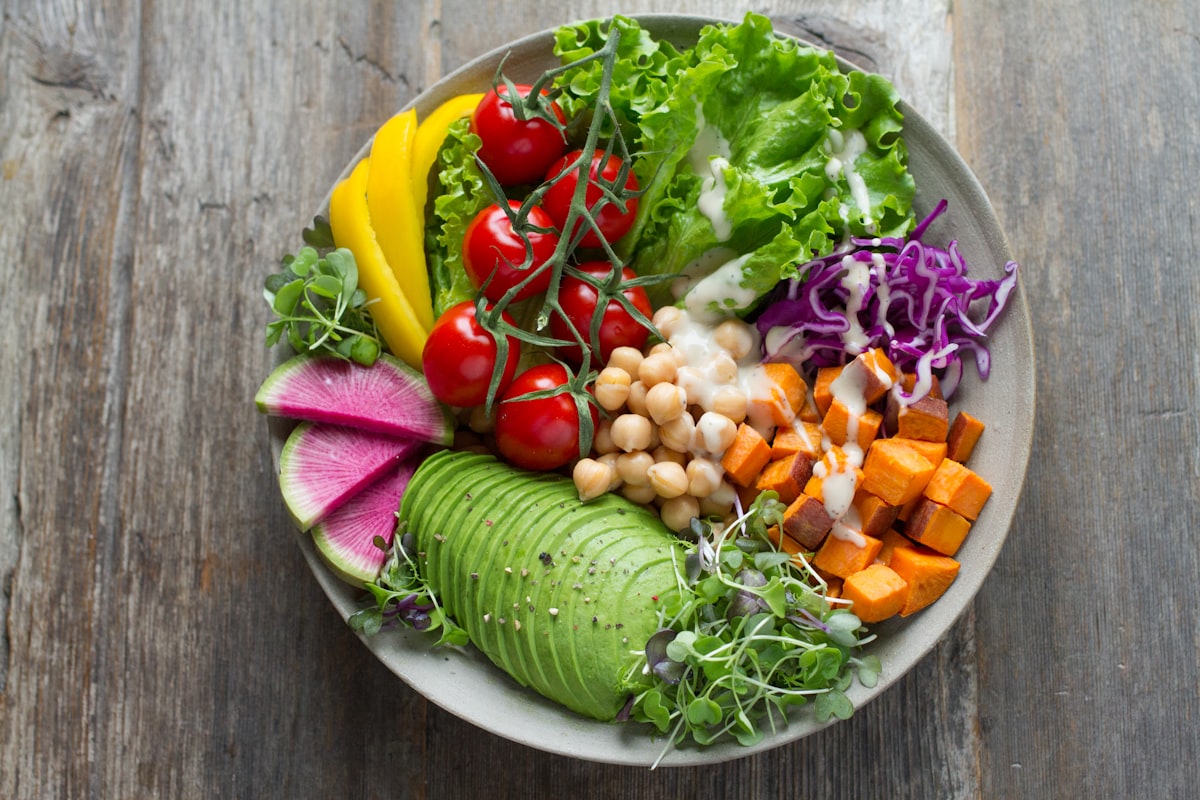
Prebiotic-rich foods are plants high in fermentable fiber:
- Garlic, onions, and leeks
- Asparagus and artichokes (especially Jerusalem artichokes)
- Slightly underripe bananas
- Oats and barley
- Chicory root, the source of most added inulin
- Legumes like lentils, chickpeas, and beans
Probiotic-rich foods are those containing live cultures:
- Yogurt and kefir with live active cultures
- Raw, unpasteurized sauerkraut and kimchi
- Miso and tempeh
- Some kombucha
The catch with probiotic foods is that processing can kill the organisms. Shelf-stable sauerkraut has usually been pasteurized, and baking destroys the cultures in sourdough. We cover which products keep their cultures alive in our guide to fermented foods for gut health.
Synbiotics: When You Combine the Two
A synbiotic is a product that combines probiotics and prebiotics together — the idea being that you deliver the beneficial organisms alongside the food that helps them thrive. In theory, the prebiotic gives the probiotic a survival advantage in the gut.
There are two types. A complementary synbiotic simply contains both a probiotic and a prebiotic that each work independently. A synergistic synbiotic pairs a specific probiotic strain with a prebiotic chosen because that exact strain uses it well. The second is the more scientifically interesting design.
A 2020 consensus statement from the International Scientific Association for Probiotics and Prebiotics formalized these definitions, reflecting growing research interest. That said, the clinical evidence that synbiotics outperform either component alone is still emerging and inconsistent across conditions.
The practical takeaway: a synbiotic is not automatically superior just because it contains two ingredients. A thoughtfully paired synergistic formula may help, but a random probiotic dusted with inulin is mostly a marketing story.
Do Supplements Actually Work? An Honest Look
This is where honesty matters more than enthusiasm. Probiotic supplements are a multi-billion-dollar industry, and the marketing routinely outruns the evidence.
Strain Specificity Is Everything
Probiotic effects are strain-specific, not species-specific and certainly not generic. Lactobacillus rhamnosus GG has good evidence for pediatric acute gastroenteritis. Saccharomyces boulardii has evidence for antibiotic-associated diarrhea. A different Lactobacillus strain, even a close relative, may do nothing for those conditions.
So a bottle that just says “supports gut health” with a proprietary blend tells you almost nothing. Without a specific, studied strain matched to a specific outcome, you are essentially guessing. The Mayo Clinic notes that while some probiotics show promise for specific conditions, evidence for general daily use in healthy people is limited.
The CFU Marketing Trap
Labels love to advertise colony-forming units (CFUs) in the billions, as if bigger is always better. More CFUs is not inherently more effective. The clinically studied dose depends on the strain and the condition, and megadoses have not been shown to produce proportionally larger benefits.
Worse, CFU counts on labels often reflect the count at the time of manufacture, not at the moment you swallow the capsule. Live organisms die over time, especially with heat and humidity. A product boasting 50 billion CFUs at packaging may deliver a fraction of that by its expiration date.
Where the Evidence Is Genuinely Strong
Probiotics have earned real clinical support in a handful of areas: reducing antibiotic-associated diarrhea, shortening infectious diarrhea in children, and easing some symptoms of irritable bowel syndrome with specific strains. A Cochrane review found that certain probiotics reduce the risk of antibiotic-associated diarrhea meaningfully — a topic we explore in gut health after antibiotics.
Outside those areas, the picture is murkier. Claims about immunity, mood, weight loss, and skin are largely preliminary. Some show promise; none are settled. Treat sweeping wellness claims with skepticism.
How to Read a Probiotic Label
If you do decide to try a probiotic, the label tells you whether the product is serious or just clever packaging. A handful of details separate the two.
- Named strain, not just species — look for something like “Lactobacillus rhamnosus GG,” including the strain designation after the species
- A studied condition — the strain should have published research for the outcome you care about
- CFU count guaranteed through expiration, not merely “at time of manufacture”
- Storage instructions — many live products require refrigeration to keep the organisms viable
- A realistic claim — reputable products describe specific, modest effects rather than promising to cure everything
If a bottle lists only a “proprietary blend” with a huge CFU number and vague promises, that is a signal to be cautious. The absence of a named, studied strain usually means the evidence is absent too. When in doubt, a pharmacist can help you evaluate whether a product matches your actual need.
Who Might Benefit, and Who Should Be Cautious
Certain groups have a stronger case for considering probiotics, ideally with a clinician’s input. People taking antibiotics, those recovering from certain gut infections, and individuals with diagnosed IBS working with a gastroenterologist may see genuine benefit from targeted strains.
For generally healthy people with no specific condition, the evidence for daily probiotic capsules is thin. That money is often better spent on a varied, fiber-rich diet — the intervention with the deepest evidence base. Even good gut health interacts with the rest of your health; adequate vitamin D and other nutrients depend partly on a well-functioning gut.
Some people should be genuinely cautious. Individuals who are severely immunocompromised — such as those on chemotherapy, transplant recipients, or people with central venous catheters — face a rare but real risk of probiotic organisms causing bloodstream infections. Critically ill patients and premature infants also require medical guidance. For these groups, probiotics are a medical decision, not a wellness whim.
Prebiotics carry fewer risks for most people, but ramping up fermentable fiber too quickly can cause gas and bloating. People with certain conditions, such as those following a low-FODMAP diet for IBS, may actually react poorly to high-inulin foods and should introduce them carefully.
When to See a Doctor
Gut supplements are not a substitute for evaluation of persistent symptoms. Talk to a healthcare provider before starting probiotics or prebiotics if you:
- Are immunocompromised, critically ill, or have a central line
- Have persistent digestive symptoms lasting more than a few weeks
- Notice blood in your stool, unexplained weight loss, or severe abdominal pain
- Are pregnant, breastfeeding, or considering these products for a child
- Have a chronic gut condition like IBD and want to add a supplement to your regimen
A doctor or registered dietitian can help match a strategy to your actual situation rather than to a label’s promises. This article is for general education and does not replace individualized medical advice.
Frequently Asked Questions
What is the main difference between probiotics and prebiotics?
Probiotics are live beneficial microorganisms you consume, while prebiotics are non-digestible fibers that feed the beneficial bacteria already living in your gut. Put simply, probiotics are the bacteria and prebiotics are their food. Both support gut health but through completely different mechanisms.
Should I take probiotics and prebiotics together?
You can, and products that combine them are called synbiotics. However, taking them together is not automatically better unless the prebiotic is chosen to support the specific probiotic strain. For most healthy people, getting both from a varied diet of fermented foods and fiber-rich plants is a reliable approach.
Do probiotic supplements really work?
It depends entirely on the strain and the condition. Specific strains have solid evidence for issues like antibiotic-associated diarrhea and childhood infectious diarrhea, but generic “gut health” supplements for healthy people have limited support. Always look for a named, studied strain rather than a vague proprietary blend.
Can I get enough prebiotics and probiotics from food?
For most people, yes. Prebiotics are abundant in garlic, onions, oats, bananas, and legumes, while probiotics come from yogurt, kefir, and raw fermented vegetables. A diverse plant-rich diet with regular fermented foods often outperforms supplements for general gut health.
Are there people who should avoid probiotics?
Yes. People who are severely immunocompromised, critically ill, or have central venous catheters face a small but serious risk of infection from probiotic organisms. Anyone in these categories should only use probiotics under medical supervision, as recommended by their doctor.