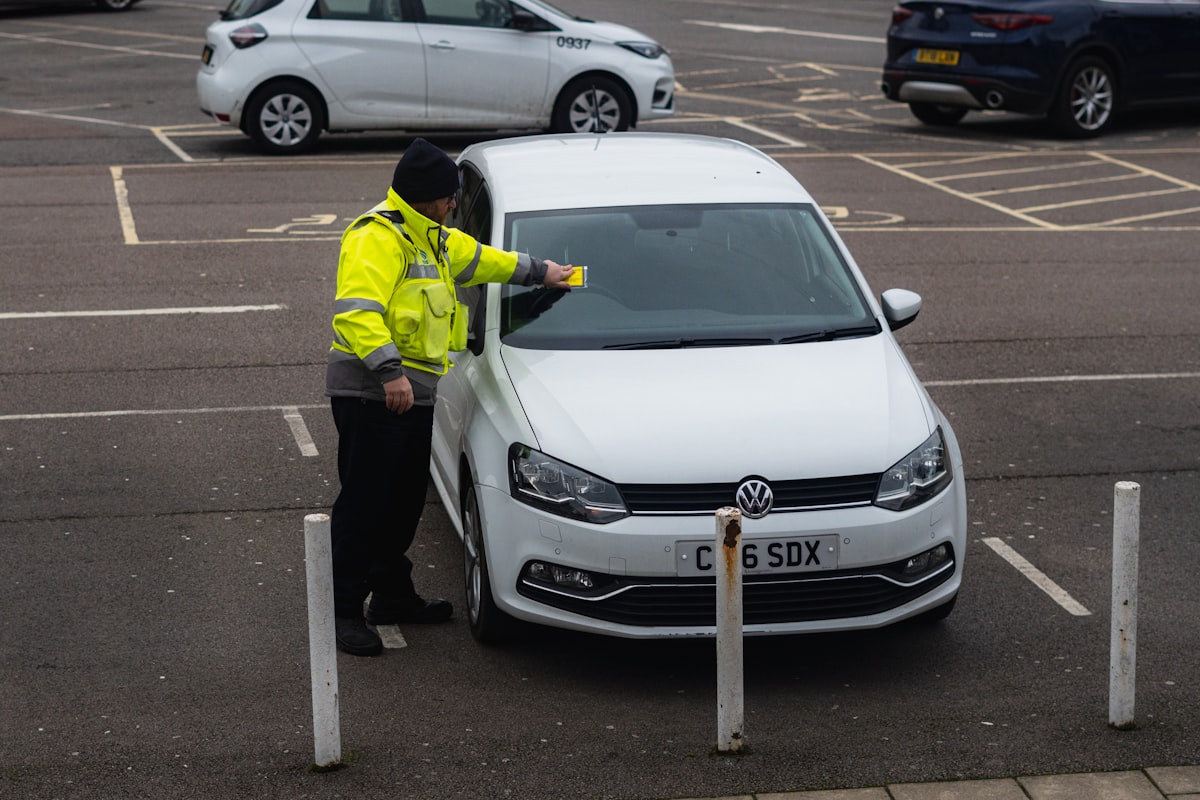
You were doing 47 in a 35 zone. Or maybe you rolled through a stop sign. Or that yellow light was shorter than you thought. The officer hands you a ticket, you sign it (which is not an admission of guilt, just an acknowledgment you received it), and you drive away with that sinking feeling. Most people pay the fine and move on.
Here is what most people do not realize: that $150 ticket can cost you $1,500 or more over the next three to five years through increased insurance premiums. And traffic court is one of the few legal arenas where an ordinary person, without a lawyer, has a realistic shot at winning — or at least reducing the charge to something that will not wreck their driving record.
Whether you should fight a ticket depends on the math: what the ticket costs now, what it will cost you in insurance over time, how many points it puts on your license, and how strong your case is. This guide covers all of that.
Key Takeaways
- A single speeding ticket raises car insurance premiums by an average of 22-25%, which translates to $400-$600 per year for a typical driver — and the increase lasts 3 to 5 years
- Most traffic tickets can be contested in traffic court without a lawyer, and roughly 50% of people who show up to fight their tickets get some form of reduction or dismissal
- The single most effective strategy is simply showing up — in many jurisdictions, if the officer does not appear, the ticket is dismissed automatically
- Points on your license accumulate and can lead to suspension: most states suspend at 12 points within 12 months, though the threshold varies from 6 to 15 points depending on the state
- Traffic school or defensive driving courses can often eliminate points from a ticket, but most states limit how often you can use this option (usually once every 12 to 18 months)
When Fighting a Ticket Is Worth It
Not every ticket is worth contesting. A parking ticket with no points and a $35 fine is probably not worth a day off work. But the calculation changes fast once moving violations and insurance impacts enter the picture.
Fight the ticket if:
- It carries points on your license (even 1-2 points can raise insurance rates)
- You are close to a point threshold that triggers license suspension
- The fine is substantial ($200+)
- You hold a commercial driver’s license (CDL), where any moving violation has amplified consequences
- You are confident the officer made a factual error (wrong vehicle, wrong speed, wrong location)
- You were cited by a speed camera or red light camera (these have higher dismissal rates due to procedural challenges)
Paying the fine may make sense if:
- The ticket carries zero points (many non-moving violations)
- You are eligible for traffic school to eliminate the points
- The fine is minimal and your time is worth more than the potential savings
- You have a long clean record and your state offers a first-offense forgiveness program
Understanding Points and Insurance Impact
Most states use a point system to track driving violations. Points are assigned based on severity:
- 1-2 points — Minor speeding (1-15 mph over), failure to signal, expired registration
- 3-4 points — Moderate speeding (16-25 mph over), running a red light, following too closely
- 5-6 points — Major speeding (25+ mph over), reckless driving, passing a school bus
- 6-12 points — DUI/DWI, hit and run, driving on a suspended license
Point thresholds for license suspension vary. New York suspends at 11 points in 18 months. California uses a “negligent operator” system that triggers action at 4 points in 12 months, 6 in 24 months, or 8 in 36 months. Florida suspends at 12 points in 12 months. Check your state’s DMV website for the specific thresholds, or see our detailed guide on how driver’s license points work, including point values by violation and how to remove them.
The insurance impact is where the real money is. According to a 2024 analysis by Bankrate, average insurance premium increases by violation type are:
- Speeding (1-15 mph over): 20-25% increase
- Speeding (16-30 mph over): 25-30% increase
- Running a red light: 20-25% increase
- Reckless driving: 65-75% increase
- DUI/DWI: 65-80% increase
For a driver paying $2,000 per year in premiums, a single speeding ticket at 20% increase means $400 extra per year for 3 to 5 years — that is $1,200 to $2,000 in added insurance costs on top of the fine. Suddenly that $150 ticket is really a $1,350 to $2,150 problem. For a full breakdown of how insurers find out about tickets and how long the surcharge lasts, see our guide on how a speeding ticket affects your insurance rates.
Your Options After Getting a Ticket
You generally have four options, though availability varies by jurisdiction:
Option 1: Pay the Fine
Paying the fine is an admission of guilt. The points go on your record. Your insurance company finds out (they check your motor vehicle report periodically, and definitely when your policy renews). Simple and painless now, potentially expensive over the next few years.
Option 2: Traffic School or Defensive Driving Course
Many states and courts allow you to attend traffic school to either dismiss the ticket entirely or prevent points from appearing on your record. The rules vary significantly:
- California allows traffic school once every 18 months for eligible violations. You pay the fine plus a court fee, complete the course, and no points are added to your record.
- Florida allows traffic school to reduce points but not eliminate them entirely for some violations.
- Texas offers defensive driving dismissal for eligible tickets — you pay a court fee, complete the course, and the ticket is dismissed.
- New York offers a Point and Insurance Reduction Program (PIRP) that reduces up to 4 points and provides a 10% insurance discount for 3 years.
Traffic school courses cost $20 to $100 and can usually be completed online in 4 to 8 hours. This is often the best option for a first offense when you are not interested in contesting the facts.
Option 3: Request a Mitigation Hearing
Some jurisdictions allow mitigation hearings where you admit the violation but explain the circumstances. The judge can reduce the fine but cannot dismiss the ticket or prevent points. This is an option if you have a sympathetic story but no real defense to the charge.
Option 4: Contest the Ticket in Court
This is where you plead not guilty and appear before a judge (or sometimes a jury, though jury trials for traffic tickets are rare and not available in all states). The state must prove you committed the violation, and you have the right to cross-examine the officer and present your own evidence.
How to Fight a Traffic Ticket: Step by Step
Step 1: Plead Not Guilty
Check the instructions on the ticket for how to enter a not-guilty plea. In most jurisdictions, you can do this by mail, online, or in person at the courthouse. You typically have 15 to 30 days from the ticket date to enter your plea. Do not miss this deadline — failure to respond can result in additional fines, a warrant for your arrest, or automatic license suspension.
Step 2: Request a Formal Court Hearing
After pleading not guilty, the court sets a hearing date. In some jurisdictions, there is an initial pretrial conference or arraignment before the actual trial. Use this opportunity to speak with the prosecutor — many will offer a reduction (for example, dropping a 20-over speeding ticket to a non-moving violation) to avoid the time and cost of a trial.
Step 3: Gather Your Evidence
Before your hearing, collect everything that supports your case:
- Photos of the location — speed limit signs, sight lines, road conditions, traffic signals
- Dashcam footage — if you have it, this can be powerful evidence
- Calibration and maintenance records — for radar/laser equipment, you can request these through discovery (a formal request for the ticketing agency’s records)
- Weather and traffic data — relevant if conditions were a factor
- Your driving record — a clean record can influence a judge even if the evidence is not entirely in your favor
- Witness statements — passengers or other observers who can corroborate your version of events
Step 4: Prepare Your Defense
Several defenses work in traffic court. Not every one applies to every situation, but these are the strategies that experienced traffic attorneys use:
The officer did not show up. In most jurisdictions, if the citing officer fails to appear at the hearing, the ticket is dismissed. Officers get paid overtime to appear in court, but scheduling conflicts, reassignments, vacations, and retirement all create situations where they do not show. In some cities, the no-show rate is 30-40%. You do not need to do anything special — just show up and, if the officer is absent, move for dismissal.
Challenging the speed measurement. Radar guns must be calibrated regularly (most departments require calibration every 30 to 60 days). Tuning forks used to verify radar accuracy must themselves be certified. If the calibration records are missing or expired, the speed reading may be inadmissible. Laser (LIDAR) devices are generally more accurate but can produce errors when aimed at reflective surfaces, through windshields, or in heavy traffic where the beam hits the wrong vehicle.
Challenging the officer’s observations. If the ticket was based on visual estimation (the officer estimated your speed without radar), the officer must be certified in speed estimation. Officers are trained to estimate speed, but their estimates are less precise than device readings and more vulnerable to challenge. For stop sign and red light violations, challenge the officer’s line of sight — could they actually see your wheels come to a complete stop from where they were positioned?
Necessity and justification. In rare cases, you can argue that the violation was necessary to avoid a greater harm — swerving to avoid a pedestrian, speeding to get away from a dangerous driver, or running a red light because of a medical emergency. This is a difficult defense but not impossible.
Signage and road conditions. If the speed limit sign was obscured, missing, or placed where a reasonable driver would not see it, this can be a valid defense. Similarly, if a traffic signal was malfunctioning, you have a defense to a red light violation.
Step 5: The Hearing
Traffic court hearings are usually informal and fast — often 10 to 15 minutes. The officer testifies first, then you can cross-examine, then you present your case. Key tips:
- Dress professionally. This is a courtroom.
- Be respectful to the judge, the officer, and court staff. “Your Honor” is always appropriate.
- Do not argue with the officer during cross-examination. Ask questions designed to highlight inconsistencies or weaknesses.
- Be concise. Judges hear dozens of these cases per day and appreciate people who get to the point.
- Bring copies of all your evidence — one for you, one for the judge, and one for the prosecutor.
Red Light Camera and Speed Camera Tickets
Camera-issued tickets are a different beast. In many jurisdictions, they carry no points and do not appear on your driving record — they are treated like parking tickets. But the fines can be substantial ($75-$500), and they are increasingly common.
Camera tickets are also more vulnerable to legal challenge:
- Many states require the camera system to be certified and the photos/video to clearly identify the vehicle and, in some jurisdictions, the driver
- Some states (like California) require a sworn declaration from a law enforcement officer who reviewed the evidence, not just an automated notice
- Constitutional challenges have been raised (and sometimes succeeded) on due process grounds — you have the right to confront your accuser, and a camera cannot testify
- Some municipalities have been caught shortening yellow light timing to increase camera revenue, which can be grounds for dismissal
As of 2025, about a dozen states have banned red light cameras entirely, and several more have banned speed cameras. Check whether camera enforcement is even legal in your jurisdiction before paying.
Commercial Driver’s License (CDL) Considerations
If you hold a CDL, traffic tickets are far more serious. CDL holders face:
- No option for traffic school to mask violations in most states
- Points that count against both your personal license and your CDL
- Employer notification of violations
- Potential loss of CDL for accumulating serious violations (two serious traffic violations in 3 years results in a 60-day CDL disqualification; three results in 120 days)
- Automatic CDL disqualification for a single DUI, regardless of whether you were driving a commercial vehicle at the time
CDL holders should always consult a traffic attorney before paying any moving violation. The stakes — your livelihood — justify the legal fees every time. The same principle applies if you are facing employment-related legal issues where your driving record affects your job.
After the Hearing: What Happens Next
If you win — congratulations, the ticket is dismissed. No fine, no points, no insurance impact.
If you lose, you pay the fine (often with additional court costs) and the points go on your record. You may have the right to appeal, but traffic ticket appeals are rarely successful and the cost usually is not justified unless the ticket involves a large fine or CDL consequences.
If you reach a plea deal (reduced charge), make sure you understand exactly what you are agreeing to — the fine amount, whether points will be assessed, and whether the reduced charge will appear on your driving record. A non-moving violation (like a “defective equipment” charge) carries no points and typically has no insurance impact, which is why it is the gold standard for plea reductions.
Frequently Asked Questions
Does a speeding ticket affect my insurance if I pay it?
Yes. Paying a traffic ticket is an admission of guilt, and the conviction appears on your motor vehicle report. Insurance companies pull this report when setting your rates. A single speeding ticket raises premiums by 20-25% on average, and the increase lasts 3 to 5 years depending on the insurer and state. Some insurers offer “accident forgiveness” or “ticket forgiveness” programs for first offenses, but these are not universal.
Can I hire a lawyer for a traffic ticket, and is it worth it?
Traffic ticket attorneys typically charge $200 to $500 for a standard moving violation ($1,000+ for DUI/reckless driving). In many cases, the attorney handles everything — you never appear in court. When you calculate the insurance premium increase a conviction would cause, an attorney’s fee often pays for itself. This is especially true for tickets with 3+ points, tickets that could push you to a suspension threshold, or CDL holders. Our guide on whether a traffic ticket lawyer is worth it includes a full cost table and a DIY-vs-lawyer decision framework.
What happens if I ignore a traffic ticket?
Nothing good. Ignoring a ticket typically results in a failure-to-appear charge (which can be a misdemeanor in some states), additional fines, a bench warrant for your arrest, and automatic license suspension. Some states, like Texas, also block vehicle registration renewal. If you receive a ticket, you must respond by the deadline — even if you plan to fight it.
Do traffic tickets from other states affect my license?
Usually, yes. Most states participate in the Driver License Compact (DLC) and the Non-Resident Violator Compact (NRVC), interstate agreements that share traffic violation information. A speeding ticket in Virginia will generally be reported to your home state and added to your record there. A few states (Georgia, Michigan, Tennessee, Wisconsin) do not fully participate in these compacts, but do not count on an out-of-state ticket going unnoticed. Our guide to out-of-state traffic tickets covers how the compacts work and what happens if you ignore a distant ticket.
Can I fight a ticket if I already paid it?
In most jurisdictions, paying the ticket constitutes a guilty plea, and the case is closed. A few states allow you to reopen a case within a limited time, but this is unusual and difficult. If you want to contest the ticket, do not pay it — enter a not-guilty plea before the deadline instead. If you already paid and the insurance impact is significant, look into your state’s point reduction programs or understanding your options when challenging financial penalties as an alternative.