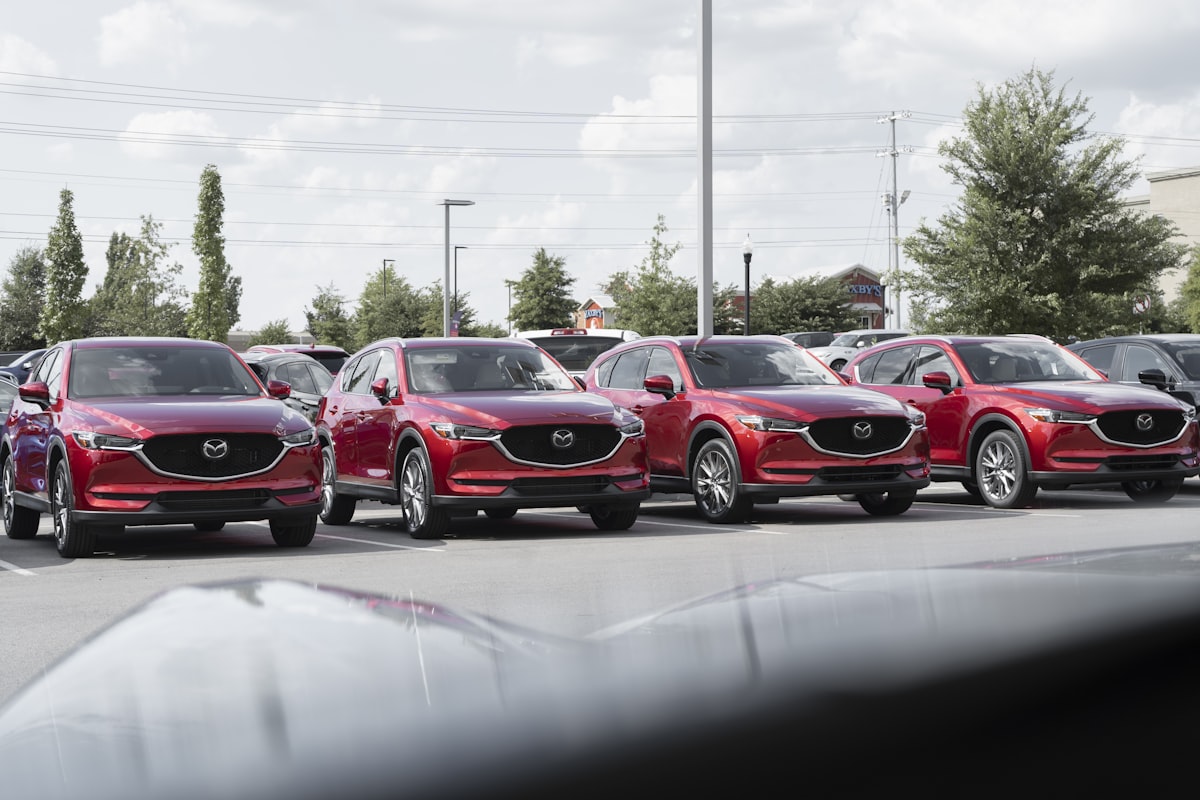
The average new car transaction price in the United States hit $48,500 in early 2026. The average monthly payment on a new car loan: $738 over 68 months. That is nearly $50,000 financed over five and a half years for a depreciating asset that loses roughly 20% of its value the moment you drive it off the lot. By year five, that car is worth about half what you paid.
Car dealerships are not evil — they are businesses designed to maximize profit on every transaction. The problem is that the typical buyer walks into a dealership armed with enthusiasm and a vague sense of their budget, while the dealer has trained finance managers, a playbook of psychological tactics, and decades of institutional knowledge about separating you from your money. The information asymmetry is enormous, and it costs the average buyer thousands of dollars per transaction.
Here are the most common and expensive mistakes people make when buying a car, and exactly how to avoid each one.
Key Takeaways
- Negotiating based on monthly payment instead of total purchase price is the single most expensive mistake buyers make — dealers manipulate loan terms to hide massive markups.
- Getting pre-approved for an auto loan from your bank or credit union before visiting the dealership gives you leverage and a baseline to compare dealer financing.
- A trade-in should be negotiated completely separately from the purchase price of the new car — dealers use trade-in values to obscure the real deal.
- Extended warranties, paint protection, fabric coating, and VIN etching sold in the finance office are almost always overpriced and unnecessary.
- Buying a car that is one to three years old with low mileage captures the steepest depreciation savings while getting a vehicle that is essentially new.
Mistake 1: Negotiating on Monthly Payment
This is the big one. When a salesperson asks, “What monthly payment are you looking for?” they are not trying to help you budget. They are trying to shift the conversation from total cost (which you can evaluate) to monthly payment (which they can manipulate endlessly).
Here is how it works. You say you want to keep payments under $500/month. The dealer can hit $500/month on a $45,000 car by stretching the loan to 84 months at 7.5% APR. You feel like you got a deal. In reality, you are paying $42,000 in principal and interest on a car that will be worth $18,000 when the loan is finally paid off seven years later.
The same $45,000 car financed at 60 months and 5.5% APR costs $860/month but saves you nearly $6,000 in total interest. The monthly payment is higher, but the total cost is dramatically lower.
The fix: Never answer the monthly payment question. Always negotiate the out-the-door price — the total amount you will pay including all fees and taxes. Say: “I want to discuss the total purchase price. We can figure out financing separately.” Dealers hate this because it eliminates their most powerful manipulation tool.
Mistake 2: Not Getting Pre-Approved Before You Shop
Walking into a dealership without pre-approved financing is like walking into a salary negotiation without knowing your market value. You are completely dependent on the dealer to tell you what you “qualify for,” and they have every incentive to mark up the rate.
Dealers frequently add 1-3% to the interest rate they receive from their lending partners. If the bank approves you at 5%, the dealer might offer you 7% and pocket the difference (called a “dealer reserve” or “rate markup”). On a $35,000, 60-month loan, a 2% rate markup costs you roughly $1,900 in additional interest.
The fix: Get pre-approved from at least two sources before visiting any dealership:
- Your bank or credit union (credit unions typically offer the lowest auto loan rates)
- An online lender like Capital One Auto Finance or LightStream
Walk in with your pre-approval letter in hand. Tell the dealer: “I have financing at 5.2%. If you can beat it, great. If not, I’ll use my own.” This forces the dealer to compete on rate rather than dictate it. Multiple credit inquiries for auto loans within a 14-day window count as a single inquiry on your credit report, so shop aggressively.
Mistake 3: Falling for the Four-Square
The four-square is a classic dealership worksheet divided into four boxes: purchase price, trade-in value, down payment, and monthly payment. The salesperson moves numbers between boxes, making it appear that improving one area (higher trade-in value) comes at the cost of another (higher purchase price) — when in reality they are adjusting all four simultaneously to maximize profit while you feel like you are “winning.”
The four-square is a distraction machine. It prevents you from focusing on the one number that matters: the out-the-door price.
The fix: Refuse the four-square. Say: “I appreciate it, but I’d like to negotiate the purchase price of the vehicle as a separate item. We can discuss my trade-in separately, and I’ll arrange my own financing.” This removes the dealer’s ability to shuffle numbers between categories.
Mistake 4: Ignoring the True Cost of Depreciation
A new $48,000 car depreciates to approximately $38,000 after one year, $28,000 after three years, and $22,000 after five years. That first-year drop of $10,000 is pure loss — value that evaporates the instant you become the car’s first owner.
A one-to-three-year-old certified pre-owned (CPO) car with 15,000-30,000 miles costs 20-35% less than the same model new, yet it still has the majority of its useful life ahead of it. Most CPO programs include an extended manufacturer warranty, and modern cars routinely last 200,000+ miles with regular maintenance.
The fix: Unless you have a specific reason to buy new (highly desired model with no used inventory, manufacturer incentives that close the gap, or personal preference you are willing to pay for), a lightly used vehicle is almost always the smarter financial move. The $10,000-$15,000 you save on depreciation can go toward your emergency fund or investments.
Mistake 5: Not Researching the Car’s True Market Value
Dealers count on you not knowing what a car is actually worth. Their sticker price (MSRP for new, their asking price for used) is the starting point for negotiation, not the fair price.
Before stepping onto a lot, check:
- Kelley Blue Book (KBB): Fair Purchase Price for new, Fair Market Range for used
- Edmunds: True Market Value for new, used car appraisal tool for trade-ins
- TrueCar: Shows what others in your area paid for the same vehicle
- CarGurus: Rates used car pricing as great deal, good deal, fair deal, or overpriced based on market comparisons
Cross-reference at least two sources. If KBB says the fair purchase price for a new Honda CR-V EX is $35,200 and the dealer’s sticker is $38,500, you know there is $3,300 of margin to negotiate. If a used 2024 Toyota Camry LE with 22,000 miles is listed at $27,000 but KBB’s fair market range is $24,500-$26,000, you know the asking price is high.
The fix: Email or text multiple dealerships (at least three) with the exact car you want — make, model, trim, color preferences — and ask for their best out-the-door price. Let them compete against each other without the psychological pressure of sitting in a showroom. This method consistently produces better prices than in-person negotiation for most buyers.
Mistake 6: Getting Destroyed in the Finance Office
You have negotiated a fair price on the car, you are feeling good, and then the finance manager invites you to “finish up the paperwork.” This is where the dealership makes a significant chunk of its profit.
The finance office will pitch a rapid-fire series of add-ons:
Extended warranty ($2,500-$4,000): Most new cars come with a 3-year/36,000-mile bumper-to-bumper warranty and a 5-year/60,000-mile powertrain warranty. A dealer-sold extended warranty is marked up 50-100% over what you would pay buying the same coverage directly from a third-party provider. If you want an extended warranty, buy it later (you can add one anytime before the factory warranty expires) from a reputable provider at a lower price.
GAP insurance ($700-$1,000 at the dealer): GAP insurance covers the difference between what you owe on the loan and what the car is worth if it is totaled. This is worth having if you put less than 20% down, but buy it from your auto insurance company or credit union for $25-$50/year instead of the dealer’s $700 markup.
Paint protection/ceramic coating ($500-$1,500): A bottle of quality ceramic coating costs $50-$100 to apply yourself or $300-$600 at a professional detailer. The dealer charges $1,000+ for the same thing.
Fabric protection ($300-$500): This is literally a can of Scotchgard. You can buy a can at any hardware store for $8.
VIN etching ($300-$400): Etching the vehicle identification number into the windows supposedly deters theft. Your local police department often offers this service for free, and many auto insurance providers do not recognize it as meaningfully reducing theft risk.
Nitrogen tire fill ($100-$200): Air is already 78% nitrogen. The marginal benefit of pure nitrogen is negligible for passenger vehicles.
The fix: Decline everything in the finance office. Say: “No thank you on all of the additional products. I just want the vehicle.” You can always add third-party products later if you decide you want them — at dramatically lower prices.
Mistake 7: Mishandling the Trade-In
Dealers use your trade-in as another lever to obscure the real deal. They might offer you $18,000 for your trade-in (which sounds generous) while inflating the purchase price by $2,000. Net result: you think you got a great trade-in value, but you actually paid more for the new car.
The fix: Get your trade-in appraised independently before visiting the dealer:
- CarMax: Gives a written offer valid for 7 days, no obligation.
- Carvana: Online appraisal and pickup.
- KBB Instant Cash Offer: Partnered dealerships honor the quoted price.
These appraisals give you a firm baseline. If the dealer offers less, you have a documented alternative. If selling privately gets you even more, consider that route — private-party sales typically net 10-20% more than dealer trade-ins, though they require more effort.
Keep the trade-in negotiation completely separate from the purchase negotiation. Settle on the new car’s price first, then discuss the trade-in as a separate transaction.
Mistake 8: Buying More Car Than You Can Afford
The lending industry will happily approve an auto loan that consumes 15% or more of your gross income. A household earning $70,000 could be approved for $900/month in car payments. Following that path means devoting over $10,000/year to a depreciating asset while shortchanging savings, retirement contributions, and other financial priorities.
A more responsible guideline: keep total transportation costs (payment, insurance, fuel, maintenance) below 15% of your take-home pay. On a $4,500/month take-home, that is $675 total — meaning the car payment itself should probably stay under $400-$450 to leave room for insurance ($150/month) and fuel/maintenance ($100-$150/month).
This math often points to a reliable used car in the $15,000-$25,000 range rather than a $48,000 new vehicle. That is not as exciting, but financial stability is more rewarding than a new car smell that fades in two weeks.
For a broader perspective on how car expenses fit into your overall spending plan, our guide on budgeting methods compared can help you allocate your income more deliberately.
The Ideal Car-Buying Playbook
- Decide your total budget based on 15% of take-home pay for all transportation costs.
- Research models that fit your needs and budget. Prioritize reliability ratings (Consumer Reports, J.D. Power).
- Get pre-approved for an auto loan from your bank/credit union.
- Get your trade-in appraised at CarMax or via KBB Instant Cash Offer.
- Contact 3-5 dealers via email/text requesting out-the-door prices on the specific vehicle you want.
- Negotiate at the lowest-priced dealer or use competing quotes to bring the price down further.
- Decline all finance office add-ons.
- Review every line of the purchase contract before signing. Verify the agreed price, interest rate, loan term, and that no products were added without your consent.
Frequently Asked Questions
Is it better to buy or lease a car?
Leasing makes sense only if you want a new car every three years, drive fewer than 12,000-15,000 miles annually, and view the car purely as an expense rather than an asset. Financially, leasing is almost always more expensive over the long term because you never build equity. Buying a reliable car and driving it for 8-10+ years is the most cost-effective approach. The years after the loan is paid off, when you drive with no car payment, are the most financially productive.
Should I pay cash or finance a car?
It depends on the interest rate. If you can get financing at 3-5% and your money would earn more invested (historically 7-10% in the stock market), financing makes mathematical sense. If the rate is 7%+, paying cash or making a large down payment saves real money. Never drain your emergency fund to pay cash for a car — liquidity matters.
How much should I put down on a car?
Aim for at least 20% down to avoid being underwater (owing more than the car is worth) from day one. If you put 0-10% down, you are likely underwater for the first two to three years of ownership due to depreciation. Being underwater means if the car is totaled or you need to sell, you owe money beyond what the car is worth.
When is the best time to buy a car?
End of the month (salespeople pushing to hit quotas), end of the quarter (dealership bonuses), end of the model year (September-November, when new models arrive and dealers need to clear old inventory), and holiday weekends (Memorial Day, Labor Day, Black Friday promotions). The time of year matters less than the quality of your research and negotiation, but timing can add an extra $500-$2,000 in savings.
Are dealership fees negotiable?
The car’s price is always negotiable. Destination/freight charges are set by the manufacturer and typically are not negotiable. “Dealer prep,” “documentation fees,” “market adjustments,” and “dealer-installed accessories” are all negotiable or removable. Some states cap documentation fees (California caps them at $85; other states have no cap, allowing $500-$1,000 doc fees). Know your state’s regulations and push back on any fee that seems inflated.